
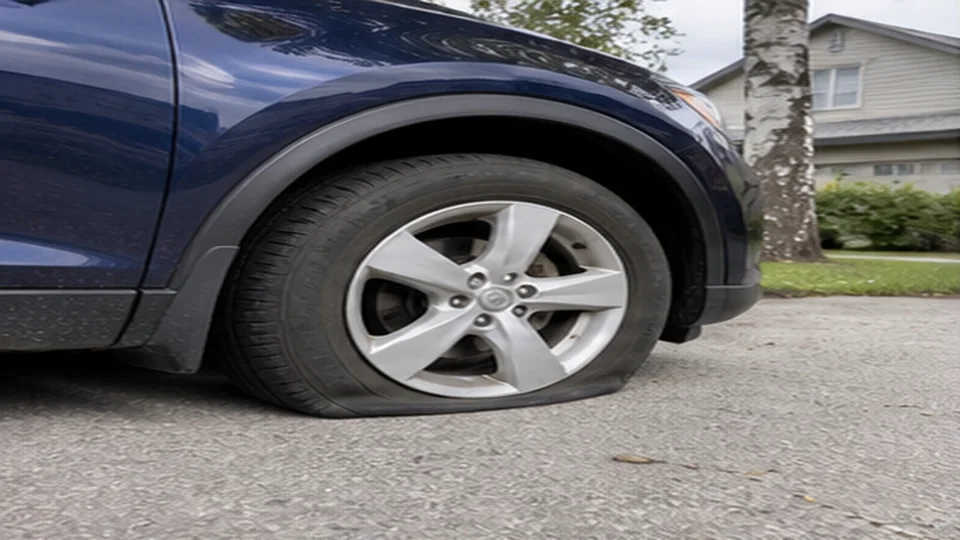
A flat tire at home is inconvenient, but it usually gives you something roadside incidents do not: time and a controlled place to assess the situation.
Stop before the tire is damaged further
Do not keep moving the vehicle on a tire that is visibly flat. Driving even a short distance can damage the sidewall or wheel and may turn a potentially repairable puncture into a replacement.
Send useful details
Share your address, vehicle year, make and model, tire size, and clear photos of the tread and sidewall. Mention whether the vehicle is in a garage and whether there is level working space around the affected wheel.
What the technician will assess
A technician must inspect the tire before confirming repairability. The location and type of damage, the tire's condition, and evidence of driving while flat all affect whether repair or replacement is appropriate.
Prepare the work area
Move other vehicles when safe, unlock gates, locate the wheel-lock key, and keep children and pets away from the working area. Never jack up the vehicle before the technician arrives unless you need to follow an emergency instruction.
What to send Tire Help
- Your exact address or live map pin
- Vehicle year, make, model and tire size
- Clear photos of the tire and surrounding area when safe
- Whether the vehicle has a spare and wheel-lock key
- Any parking, garage or roadside access details